Theodor W. Adorno: Portrait of a Marxist mandarin
DOI:
https://doi.org/10.32399/ICSYH.bvbuap.2954-4300.2010.9.15.436Keywords:
dialectic of enlightenment, biography, personality, exile, critical theory, contradiction, rationalityAbstract
Starting from a series of biographies which commemorate the centenary of the birth of Theodor W. Adorno (1903-1969), this article is a reflective work on the personal aspects and contradictions in Adorno’s political thought and practice. It is not an extensive biography, but a historian’s point of view about certain personal characteristics of Adorno. The first part refers to Adorno’s thought regarding the dialectic of enlightenment and his political practice during the rise of Nazism. A second reflection refers to the conditionings of the exile, an important part in Adorno’s thought and work. The third section describes Adorno’s return to Germany and narrates his controversial relation with the movements of 1968 who, according to Marcuse, put critical theory to the service of the revolution.
Downloads
Downloads
Published
How to Cite
Issue
Section
License

This work is licensed under a Creative Commons Attribution-NonCommercial-ShareAlike 4.0 International License.
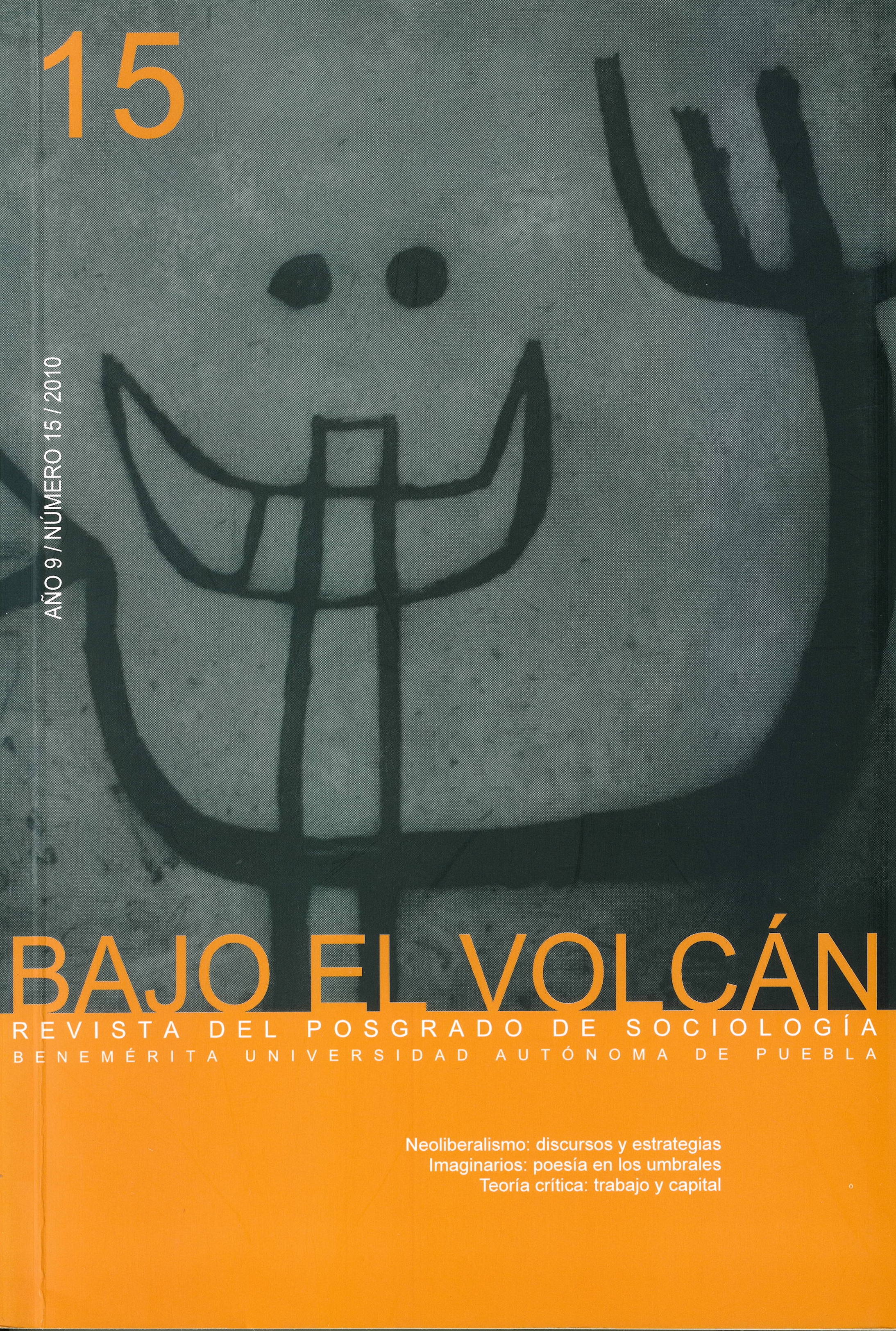
BAJO EL VOLCÁN. REVISTA DEL POSGRADO DE SOCIOLOGÍA. BUAP